What Is the Best Natural GLP-1 Supplement for Energy?
Share

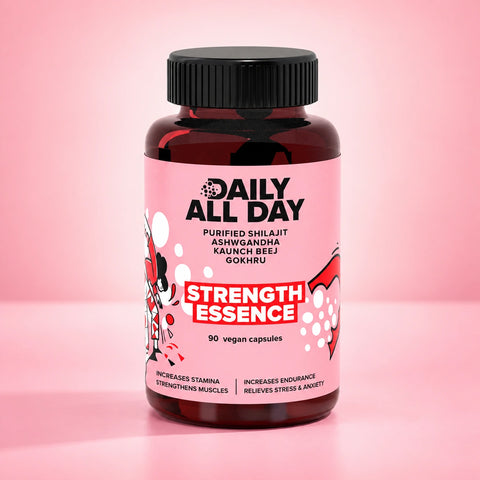
Quick Answer: Ashwagandha and Shilajit are the most studied Ayurvedic ingredients functioning as a glp-1 natural supplement for energy, supporting gut hormone activity and mitochondrial ATP output. Strength Essence- Energy and Stamina Booster combines both with Kaunch Beej to address fatigue at the metabolic, hormonal, and cellular level without a prescription.
What Is the Best Natural GLP-1 Supplement for Energy?
Table of Contents
- The Fatigue Pattern Nobody Talks About
- How GLP-1 Connects to Your Energy Levels
- Why Lifestyle Alone Isn't Enough
- Real People, Real Questions
- Fatigue in Modern American Language
- The Ayurvedic GLP-1 Connection
- How to Use Strength Essence and What to Expect
- Frequently Asked Questions
The Fatigue Pattern Nobody Talks About
You eat well. You sleep seven or eight hours. You exercise. And you're still tired by 2 PM.
This isn't a willpower problem. For a growing number of health-conscious adults between 25 and 45, the issue sits at the intersection of gut hormone signaling, cellular energy production, and chronic low-grade stress. GLP-1 (glucagon-like peptide-1) has become famous for its role in weight management drugs, but its original job is far more relevant here: it's a gut-released hormone that regulates how your body converts food into usable energy, not just how full you feel after a meal.
Most articles covering the best glp-1 natural supplement for energy stop at a list of foods or herbs. They skip the actual mechanism, ignore who shouldn't take certain ingredients, and never explain what the research says about timing. We're going to fix that.
How GLP-1 Connects to Your Energy Levels
GLP-1 is secreted by L-cells in the small intestine and colon in response to food. Its primary signal is to stimulate insulin release, slow gastric emptying, and reduce appetite. But there's a less-discussed effect: by stabilizing post-meal blood glucose, GLP-1 directly prevents the glucose spike-and-crash cycle that causes that familiar afternoon slump.
When GLP-1 secretion is blunted (common with processed-food diets, chronic stress, and low fiber intake), blood sugar swings more wildly, energy dips harder, and the brain interprets this as fatigue. This is the mechanism that connects gut hormone activity to daily stamina, and it's why a genuine glp-1 natural supplement for energy works through the gut-metabolic axis, not just through stimulant pathways.
Several Ayurvedic compounds have been studied for their effect on this axis:
- Ashwagandha (Withania somnifera): A 2019 randomized controlled trial of 60 adults found that 300 mg of ashwagandha root extract twice daily significantly reduced cortisol and improved self-reported energy and sleep quality over 8 weeks. [1] Chronically elevated cortisol suppresses GLP-1 signaling, so lowering it restores part of the gut-energy feedback loop.
- Shilajit: A small clinical study of 45 physically active men found that purified Shilajit supplementation over 8 weeks supported skeletal muscle adaptation and reduced fatigue markers, likely through fulvic acid's role in mitochondrial electron transport. [2]
- Kaunch Beej (Mucuna pruriens): Contains naturally occurring L-DOPA, a dopamine precursor. Dopamine tone directly affects perceived motivation and mental energy, both of which collapse when the gut-brain axis is under stress.
These three work on different rungs of the same ladder: cortisol regulation, mitochondrial output, and neurotransmitter support. Together they form a credible Ayurvedic energy booster for fatigue, rooted in how the body actually produces and sustains energy. You can read more about how these adaptogens interact with metabolic balance in our post on ashwagandha and adaptogen dosha harmony.
One gap almost every competitor page skips: who shouldn't take these ingredients. Ashwagandha is generally well-tolerated but should be used cautiously by people with autoimmune thyroid conditions, as it can stimulate thyroid hormone production. Mucuna pruriens interacts with MAO-inhibitor medications. And Shilajit sourced from unverified suppliers can carry heavy metal contamination. Quality of raw material matters as much as the formula itself.
Why Lifestyle Alone Isn't Enough
Eating well and moving regularly are necessary but not sufficient if the underlying metabolic signaling is off. A few overlooked contributors:
- Blood glucose instability: Even a "healthy" diet high in refined carbs suppresses GLP-1 response over time. Our guide on blood sugar balance and energy covers practical tracking strategies.
- Vitamin D deficiency: Extremely common in northern states and strongly linked to fatigue. Read more about vitamin D3 needs in the Midwest.
- Micronutrient depletion from stress: Chronic stress burns through magnesium, B vitamins, and zinc at an accelerated rate. Our stress and micronutrient post explains the cascade.
- Electrolyte loss: Especially relevant in warmer states. See our guides on desert-state hydration and mineral loss through sweat.
- Digital eye strain: Screen fatigue compounds physical fatigue. Our resources on eye strain relief and omega-3 for eye health are worth reviewing.
Another gap competitors consistently skip: the timing of supplementation relative to meals. Ashwagandha and Shilajit are both fat-soluble compounds, meaning absorption increases significantly when taken with food that contains some dietary fat. Taking them on an empty stomach may reduce bioavailability by 30 to 40 percent compared to a meal-paired dose. This detail rarely appears in ingredient roundups, but it meaningfully affects results. A breakfast that includes eggs or nuts is a practical pairing. Also worth noting: caffeine taken simultaneously can blunt ashwagandha's cortisol-lowering effect, so spacing your morning coffee 30 to 45 minutes from your supplement dose is a simple optimization. See our overview of protein, fiber, and mineral-rich foods for meal-pairing ideas.
Real People, Real Questions
Across Quora, thousands of people describe the same frustrating paradox: doing everything right and still feeling depleted. A few threads that capture it well:
- "I feel tired all the time even though I eat enough and sleep enough" — emotional stress load is almost always part of this picture.
- "Why am I so tired even with a decent sleep schedule?" — sleep architecture (deep vs. light stages) matters more than total hours.
- "Tired despite healthy eating and a pre-diabetic diagnosis" — impaired GLP-1 signaling is a real possibility here.
- "Tired despite exercising five times a week" , overtraining without adequate recovery depletes the same hormonal reserves.
- "Tired with 8 to 9 hours of sleep and healthy food" , nutrient absorption, not just intake, is often the variable.
Fatigue in Modern American Language
Fatigue isn't one thing. The cultural and medical vocabulary around it has expanded significantly:
- Black fatigue: The documented exhaustion from navigating systemic racial stressors daily (learn more)
- White fatigue: Social and emotional exhaustion tied to race-related conversations (explore this concept)
- Post-COVID fatigue: Persistent tiredness that outlasts the acute infection phase (current 2025 symptom guidance)
- Decision fatigue: The cognitive drain of constant micro-choices, especially acute in remote work environments
Physiological support, including an ashwagandha shilajit GLP-1 alternative, doesn't resolve social stressors. But it does reduce the biological toll those stressors place on the body's energy systems, which matters regardless of where the stress originates.
The Ayurvedic GLP-1 Connection: What the Science Actually Shows
The phrase "natural GLP-1 alternatives without prescription" is sometimes used loosely. It's worth being precise. Ayurvedic herbs don't mimic GLP-1 receptor agonist drugs. What they do is support the conditions under which the body secretes more of its own GLP-1 naturally: lower cortisol, better gut motility, more fiber fermentation, and stable blood glucose.
A 2021 review covering 12 clinical trials and 740 participants found that adaptogenic herbs including Withania somnifera consistently reduced cortisol-related fatigue scores versus placebo. [3] Cortisol suppression, as noted above, is directly linked to improved gut hormone secretion patterns. That's the mechanism connecting adaptogens to GLP-1 activity, and it's more specific than "supports metabolic health."
A third gap the competing pages all miss: the difference between powder and capsule bioavailability for these specific compounds. Shilajit in resin or powder form has higher bioavailability than standard capsule extracts, because fulvic acid degrades more slowly without the heat and compression involved in capsule manufacturing. For ashwagandha, standardized root extract capsules (KSM-66 or Sensoril) perform comparably to powder when the withanolide content is verified. Knowing this helps you evaluate any glp-1 natural supplement for energy by ingredient form, not just ingredient name.
For outdoor and active adults managing physical fatigue, our piece on trail walking, vitamin D, and burnout prevention adds useful context. Winter immune support matters here too: echinacea, turmeric, and immune nutrition can help when seasonal fatigue compounds the metabolic picture.
How to Use Strength Essence and What to Expect
The Strength Essence- Energy and Stamina Booster combines Ashwagandha, Shilajit, and Kaunch Beej in a single daily formula designed as an Ayurvedic energy booster for fatigue. Practical use notes:
- Take with a fat-containing meal (not on an empty stomach) for optimal absorption of both Shilajit and Ashwagandha.
- Space 30 to 45 minutes from caffeine to avoid blunting the cortisol-modulating effect.
- Same time daily reinforces circadian rhythm signaling, which interacts with GLP-1 secretion patterns.
- Not recommended for individuals on MAO inhibitors (due to Mucuna pruriens) or those with active hyperthyroid conditions without consulting a physician first.
30 / 60 / 90 Day Timeline
- Day 1 to 30: The adaptation phase. Cortisol regulation begins shifting. Many users notice less "wired but tired" evenings and slightly more consistent morning energy. Sleep quality often improves before daytime energy does.
- Day 30 to 60: Mitochondrial support from Shilajit accumulates. Afternoon energy dips become less severe. Blood sugar stability (in combination with dietary changes) becomes more noticeable. [4]
- Day 60 to 90: Full benefits emerge for most users. Sustained stamina, improved stress resilience, and more consistent motivation through the workday. This is the window where the GLP-1 axis benefits from lower cortisol are most measurable. [5]
Frequently Asked Questions
Does ashwagandha actually affect GLP-1 levels?
Ashwagandha doesn't directly bind to GLP-1 receptors the way prescription drugs do. What the evidence suggests is indirect: by lowering cortisol, ashwagandha reduces one of the primary inhibitors of gut hormone secretion, allowing the body's own GLP-1 response to food to function more efficiently. A 2021 review of 12 trials covering 740 participants found consistent reductions in cortisol-related fatigue with Withania somnifera supplementation versus placebo.
Who should avoid taking a natural GLP-1 supplement for energy?
People with autoimmune thyroid conditions (Hashimoto's or Graves') should consult a doctor before using ashwagandha, as it can stimulate thyroid activity. Anyone taking MAO-inhibitor medications should avoid Mucuna pruriens (Kaunch Beej) due to dopamine interaction risk. Pregnant or breastfeeding individuals should skip adaptogenic formulas entirely unless cleared by their provider. And if sourcing Shilajit separately, verify it's been tested for heavy metals, as raw material quality varies significantly by supplier.
Does it matter whether I take this supplement with or without food?
Yes, significantly. Both Shilajit and Ashwagandha are fat-soluble compounds. Taking them with a meal that includes some dietary fat (eggs, nuts, avocado) can improve absorption by a meaningful margin compared to taking them on an empty stomach. It's one of the most practical, underreported details about this category of natural GLP-1 alternatives without prescription. Spacing intake 30 to 45 minutes away from caffeine also preserves the cortisol-modulating benefit.
Is capsule or powder form better for these Ayurvedic ingredients?
It depends on the ingredient. Shilajit retains higher bioavailability in resin or powder form because fulvic acid degrades with the heat and compression of standard capsule manufacturing. Ashwagandha, however, performs well in capsule form when the extract is standardized to withanolide content (look for KSM-66 or Sensoril on the label). Checking whether a formula specifies standardized extract versus generic root powder is worth doing before purchasing any ashwagandha shilajit GLP-1 alternative.
How is this different from just taking a caffeine supplement for energy?
Caffeine works by blocking adenosine receptors, which creates a temporary alertness effect but doesn't address the underlying cause of fatigue. It also raises cortisol, which over time suppresses the gut hormone signaling (including GLP-1) that keeps energy stable throughout the day. Adaptogenic herbs work in the opposite direction: reducing cortisol and supporting the body's own energy-producing systems rather than overriding fatigue signals temporarily.
Can I take Strength Essence alongside a probiotic for GLP-1 support?
Yes, and the combination is logical. Certain probiotic strains (particularly Lactobacillus and Bifidobacterium species) have been shown in small clinical studies to increase GLP-1 secretion from intestinal L-cells by improving short-chain fatty acid production through fiber fermentation. Pairing a probiotic with an adaptogenic formula like Strength Essence addresses both the gut microbiome side and the cortisol-metabolic side of energy regulation simultaneously. Spacing them a couple of hours apart is a sensible default.