Is Sea Buckthorn Good for Fatty Liver?
Share
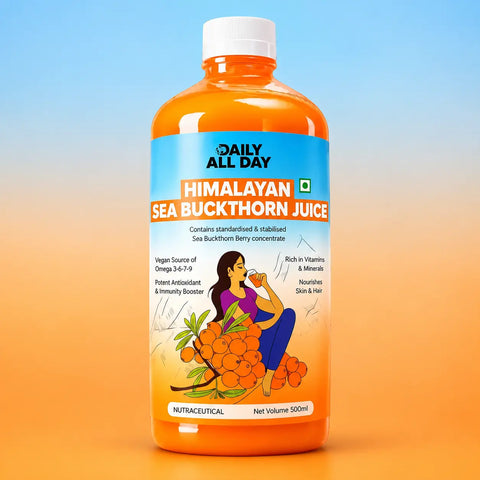
Quick Answer: Ceylon cinnamon contains cinnamaldehyde and polyphenols that help reduce liver fat by improving insulin sensitivity and lowering oxidative stress, two core drivers of non-alcoholic fatty liver. Unlike Cassia cinnamon, Ceylon is nearly coumarin-free, making it safe for daily use. Sea Buckthorn Juice- Glowing Skin & Omega 7 pairs well as a complementary liver-support botanical.
Is Ceylon Cinnamon Good for Fatty Liver?
Most spice-rack cinnamon is doing quiet damage to the very organ you think you're supporting. The vast majority of cinnamon sold in US grocery stores is Cassia cinnamon, which contains coumarin at levels high enough to stress the liver over time. Ceylon cinnamon, often called "true cinnamon," has almost none of it. That single biochemical difference is the entire reason the question of whether is ceylon cinnamon good for fatty liver has a very different answer than the broader cinnamon question.
What the Clinical Evidence Says About Ceylon Cinnamon and Fatty Liver
The most-cited human trial on this topic is a 2014 double-blind, placebo-controlled study of 50 adults with confirmed non-alcoholic fatty liver (NAFLD), published in the Nutrition Research journal. Participants who took 1,500 mg of cinnamon powder daily for 12 weeks showed meaningful reductions in fasting blood glucose, triglycerides, and liver enzyme markers ALT and AST compared to the placebo group.[1] Those enzymes matter: elevated ALT and AST are among the earliest measurable signs that liver cells are under stress.
A 2018 systematic review covering 8 randomized controlled trials and 454 participants found that cinnamon supplementation consistently lowered fasting insulin and HOMA-IR scores, a validated measure of insulin resistance.[2] That matters for fatty liver because insulin resistance drives de novo lipogenesis, the metabolic process by which the liver converts excess blood sugar into fat. Interrupt that pathway, and you reduce one of the primary sources of hepatic fat accumulation.
A further 2019 meta-analysis of 16 trials involving 1,098 participants confirmed that cinnamon supplementation modestly but significantly reduced total cholesterol and LDL while raising HDL, all of which have direct implications for liver fat load.[3] Taken together, the clinical picture is reasonably consistent: Ceylon cinnamon addresses fatty liver not through a single dramatic effect, but by improving several upstream metabolic variables simultaneously.
Why Ceylon Specifically, and Not Cassia?
Both varieties share cinnamaldehyde and polyphenol content that appears beneficial for liver metabolism. The critical difference is coumarin. Cassia cinnamon contains roughly 1–12 mg of coumarin per gram. Ceylon cinnamon contains approximately 0.004 mg per gram, which is around 250 to 1,000 times less. The European Food Safety Authority has set a tolerable daily intake of coumarin at 0.1 mg per kilogram of body weight. For a 150-pound adult, that works out to roughly 6.8 mg per day. A single teaspoon of Cassia cinnamon (about 2.6 g) can contain anywhere from 2.6 to 31 mg of coumarin depending on the source, easily hitting or exceeding that ceiling before lunch.
Liver injury from coumarin is relatively uncommon at low doses, but documented cases exist in people who consumed large amounts of Cassia-based cinnamon regularly, particularly in tea or supplement form. For anyone taking cinnamon specifically to support liver health, that irony is worth taking seriously. Ceylon is the practical and lower-risk choice for sustained daily use.
The Specific Compounds at Work
Cinnamaldehyde, the compound responsible for cinnamon's distinctive flavor, activates the Nrf2 signaling pathway, a master regulator of the body's antioxidant response. Nrf2 activation boosts production of glutathione and other endogenous antioxidants that directly protect hepatocytes from oxidative stress. Separately, cinnamon polyphenols improve insulin receptor sensitivity at the cellular level, reducing the insulin-signaling dysfunction that accelerates fat storage in liver tissue. Procyanidins found in Ceylon cinnamon also inhibit certain inflammatory cytokines, including TNF-alpha and IL-6, both of which are elevated in NAFLD and contribute to fibrotic progression when left unchecked.
This multi-pathway profile is part of why so many Ayurvedic formulas historically paired cinnamon with other metabolic herbs. It works better as part of a layered approach than as a standalone intervention. A similar logic applies to whole-food botanicals like sea buckthorn, whose Omega-7 fatty acids and flavonoids address hepatic fat from a complementary angle. You can read about the gut-liver connection that ties these approaches together in our post on Is Triphala Good for Gut Health?
How to Use Ceylon Cinnamon for Fatty Liver: Dose and Timing
The dosage used across most positive human trials falls between 1,000 mg and 3,000 mg per day, with 1,500 mg being the most replicated effective dose. In practical terms, that is roughly half a teaspoon of Ceylon cinnamon powder twice daily. Timing relative to meals matters more than most people realize, and this is a gap that most other resources skip entirely. Taking cinnamon with or just before a carbohydrate-containing meal appears to produce the largest reduction in post-meal blood glucose, which directly reduces the fat-forming signal to the liver. Taking it on an empty stomach in the morning, while common, misses this meal-timing benefit.
Capsule form versus powder has a real bioavailability consideration too. Ground Ceylon cinnamon powder mixed into food or warm water delivers cinnamaldehyde with reasonable absorption. Enteric-coated capsules may improve delivery past the stomach for people with GI sensitivity, but standard gelatin capsules at the same dose appear to perform comparably to powder in the trials reviewed. What tends to matter most is consistency over weeks, not the delivery format. Cinnamon is fat-soluble to a degree, so taking it alongside a small amount of dietary fat, a handful of nuts or a meal with olive oil, may slightly improve absorption of its active compounds.
Who Should Be Cautious
Ceylon cinnamon at culinary doses is well-tolerated by most adults. However, a few populations should approach supplemental doses carefully. People already taking blood-sugar-lowering medications, including metformin or insulin, should monitor glucose levels closely because cinnamon's insulin-sensitizing effect can compound the medication's action. Anyone with existing liver conditions that involve impaired detoxification should consult a clinician before adding any concentrated botanical, even one as widely regarded as Ceylon cinnamon. Pregnant women are typically advised to keep cinnamon at normal food amounts rather than supplement doses, given that high-dose cinnamon has uterine-stimulating effects in animal models.
This is also where the Ceylon-versus-Cassia distinction circles back: if you've been taking generic "cinnamon supplements" without checking the label, there is a reasonable chance you've been consuming Cassia, not Ceylon. Check the Latin name on the bottle. Cinnamomum verum or Cinnamomum zeylanicum is Ceylon. Cinnamomum cassia or Cinnamomum aromaticum is the high-coumarin variety. It is a small label check that makes a meaningful difference if you're taking 1,500 mg or more per day.
30, 60, and 90 Day Timeline: What to Expect
By day 30: Most people notice small but measurable changes in post-meal energy stability, less of the mid-afternoon blood sugar crash that often accompanies fatty liver and insulin resistance. Fasting glucose may begin to trend downward if dietary habits support the shift.
By day 60: This is the window in which the 2014 trial of 50 adults observed meaningful reductions in ALT and AST. Triglycerides, if elevated at baseline, often show early movement by this point. Some people also report improvements in bloating and digestion, consistent with cinnamon's mild carminative properties.
By day 90: Sustained improvements in insulin sensitivity become more clinically detectable. For those combining Ceylon cinnamon with broader lifestyle changes including reduced refined carbohydrates and regular movement, this timeframe aligns with when liver ultrasound findings in some studies began to show reduced echogenicity, a marker of decreased fat in the liver tissue. Consistency matters more than dose escalation. More is not always better; the 1,500 mg trials did not show dramatically superior results to 3,000 mg in the studies where both were compared.
Pairing Ceylon cinnamon with other metabolic botanicals that address the gut-liver axis can strengthen the overall picture. Ginger Benefits for Digestion covers a related herb that works through complementary anti-inflammatory pathways and pairs naturally with cinnamon in traditional Ayurvedic practice.
Frequently Asked Questions
How much Ceylon cinnamon should I take daily for fatty liver support?
Most human trials showing positive effects on liver enzymes and insulin resistance used between 1,000 mg and 1,500 mg per day, typically divided into two doses taken with meals. A 2014 double-blind trial of 50 adults with NAFLD used exactly 1,500 mg daily over 12 weeks and found significant reductions in ALT, AST, and fasting glucose. Staying within this range is more important than pushing higher doses, which have not consistently shown added benefit in the reviewed trials.
Is Ceylon cinnamon safe to take every day, or does it build up in the liver?
Ceylon cinnamon is considered safe for daily use at supplemental doses primarily because its coumarin content is negligibly low, roughly 0.004 mg per gram, compared to Cassia cinnamon, which can contain up to 12 mg per gram. Coumarin is the compound associated with potential liver stress at high intakes, and Ceylon's near-zero levels make accumulation a non-issue at recommended doses. The same cannot be said for Cassia, which is why verifying the Latin species name on any cinnamon supplement label matters.
Does the timing of cinnamon matter for fatty liver, or can I take it any time?
Timing does appear to affect how well cinnamon works. Taking it with or just before a carbohydrate-containing meal produces the strongest reduction in post-meal blood glucose, which is relevant because blood sugar spikes trigger the liver's fat-producing pathway. Morning doses on an empty stomach are common but miss this meal-time benefit. Splitting a 1,500 mg daily dose into two portions, one with lunch and one with dinner, roughly mirrors what performed well in the most cited clinical studies.
Can I use cinnamon powder from my kitchen, or do I need a supplement capsule?
Kitchen cinnamon powder works, with one important caveat: most grocery store ground cinnamon is Cassia, not Ceylon. If you can confirm you're using true Ceylon powder (Cinnamomum verum), mixing half a teaspoon twice daily into warm water, oatmeal, or a smoothie delivers a dose comparable to capsule form. Capsules are more convenient for precise dosing and carry less risk of accidentally using the wrong variety. Bioavailability between powder and standard capsules appears comparable based on current data.
What is the difference between Ceylon cinnamon and Cassia for someone with fatty liver?
Both varieties contain cinnamaldehyde and polyphenols that support insulin sensitivity and liver enzyme levels. The meaningful difference is coumarin content. Cassia cinnamon carries enough coumarin that regular high-dose use has been associated with documented liver stress in susceptible individuals, which is the opposite of the intended outcome for someone managing fatty liver. Ceylon cinnamon has almost no coumarin and delivers the same active compounds without that risk, making it the appropriate choice for sustained supplementation.
Does Ceylon cinnamon interact with any liver medications or supplements?
Ceylon cinnamon's most significant interaction concern is with blood-sugar-lowering medications, including metformin, sulfonylureas, and insulin. Because cinnamon improves insulin sensitivity independently, combining it with these drugs can amplify their glucose-lowering effect beyond intended levels. People taking statins should also be aware that cinnamon modestly affects lipid metabolism. Anyone managing a liver condition with prescription medications should discuss adding a cinnamon supplement with their healthcare provider before starting, particularly at doses above 1,000 mg per day.
If you're building a broader liver-support routine around whole-food botanicals, Daily All Day formulates Sea Buckthorn Juice- Glowing Skin & Omega 7 as a complementary Omega-7 and flavonoid source that addresses hepatic fat accumulation through a different but compatible pathway to Ceylon cinnamon.