Do GLP-1 Natural Alternatives Work for Fatigue?
Share

Quick Answer: Yes, certain plant compounds genuinely support GLP-1 pathways and may reduce fatigue tied to blood sugar swings. Gymnema Sylvestre works by blunting post-meal glucose spikes, which smooths the energy crashes that follow. Gluco Wise- Blood Sugar Support combines Gymnema with Bitter Melon and Fenugreek to target this mechanism daily.
Do GLP-1 Natural Alternatives Work for Fatigue?
Eight hours of sleep. Alarm goes off. Still exhausted. If that's your morning, blood sugar instability may deserve more attention than your mattress does. The question of whether do GLP-1 natural alternatives really work for fatigue isn't just trending alongside Ozempic buzz — it touches a real physiological gap that millions of Americans experience daily but rarely connect to glucose regulation. For a broader look at metabolic fatigue drivers, see our Liver Support Supplements: Natural GLP-1 Alternative Guide.
Table of Contents
- Why You're Still Tired After 8 Hours
- What Real People Are Asking
- The Main Reasons Energy Crashes Happen
- Vitamin D, Metabolic Health, and the Research
- Diet, Stress, and Modern Life
- Ingredients Deep Dive: What the Science Actually Shows
- Frequently Asked Questions
Why You're Still Tired After 8 Hours
Sleep duration and sleep quality are not the same thing. Blood sugar that swings too high after dinner, then drops overnight, can fragment your deep sleep stages without waking you fully. You hit the pillow for eight hours and surface feeling like you got four. That's not a sleep problem in the conventional sense. It's a metabolic one.
GLP-1 (glucagon-like peptide-1) is a gut hormone released after eating. It signals the pancreas to release insulin in a measured way, slows gastric emptying, and helps the brain register fullness. When GLP-1 signaling is sluggish — which can happen with poor diet, low fiber intake, and gut microbiome imbalance — glucose hits the bloodstream faster and harder. Energy spikes. Then crashes. The question of whether do GLP-1 natural alternatives really work for fatigue comes down to whether certain plants can nudge this system toward steadier output.
Short answer: some can, and the evidence is more specific than most general wellness articles suggest. The three things those articles typically skip are: (1) which compounds actually act on GLP-1 secretion versus simply slowing glucose absorption, (2) what happens to people who have normal fasting glucose but still crash after meals, and (3) how long you actually need to use these ingredients before the fatigue pattern shifts. We'll address all three below.
What Real People Are Asking
Across community forums, the pattern is consistent. People aren't asking about GLP-1 by name , they're describing the symptom and looking for a real explanation.
- Why do you still feel tired after eight hours of sleep? , Sleep architecture disruption, often metabolic in origin, tops the answers.
- Why do I feel sleepy all day when I sleep more than 8 hours? , Oversleeping itself can signal underlying glucose dysregulation.
- What's the real reason people feel tired all the time, even if they sleep enough? , Nutrient depletion and blood sugar instability come up repeatedly.
- Why do I feel sleepy all day even after sleeping 8 hours? , Post-meal crashes are cited as a common culprit.
- Why do I sleep 8 hours but still feel as if I got no sleep — for two weeks straight? , The two-week timeframe often aligns with a dietary change or a stress spike that disrupts insulin sensitivity.
Fatigue carries cultural weight too. Concepts like black fatigue name the compounding exhaustion that comes from chronic stress layered on top of physiological depletion , a reminder that energy isn't purely biochemical. That said, addressing the metabolic piece is one concrete lever people can actually pull.
The Main Reasons Energy Crashes Happen
Persistent fatigue despite adequate sleep usually has more than one driver. These are the most common, and they interact:
- Post-meal glucose spikes from refined carbohydrates, followed by a sharp insulin response that overshoots and drops blood sugar below comfortable baseline.
- Blunted GLP-1 secretion linked to low dietary fiber, processed food intake, and reduced gut microbiome diversity.
- Chronic cortisol elevation from work stress, which raises fasting glucose and disrupts overnight repair cycles.
- Micronutrient gaps, particularly B vitamins, magnesium, and iron, each of which plays a direct role in ATP production. Processed foods impair iron absorption significantly in the American diet.
- Meal skipping during busy remote-work days, which creates micronutrient gaps that compound over weeks. See how meal skipping affects micronutrient balance for a closer look.
The GLP-1 connection is significant here because it sits upstream of several of these problems. Robust GLP-1 signaling slows gastric emptying, reduces the speed of glucose entry into the bloodstream, and supports the kind of steady insulin release that prevents the overshoot-and-crash cycle.
Vitamin D, Metabolic Health, and the Research
Vitamin D quietly touches glucose metabolism in ways most people underestimate. Receptors for vitamin D appear on pancreatic beta cells, and low serum levels correlate with reduced insulin secretion and poorer glucose tolerance. This matters for fatigue because the same mechanism that produces poor glycemic control also produces the post-meal energy dip.
A 2023 clinical analysis of 312 adults with suboptimal vitamin D status found measurable improvements in insulin sensitivity after 16 weeks of supplementation. [1] A separate 2024 study involving 89 participants with fatigue as a primary complaint noted that correcting vitamin D deficiency reduced self-reported daytime tiredness scores significantly over 12 weeks. [2] A 2024 trial of 204 participants further confirmed that vitamin D optimization was associated with improved sleep quality scores, suggesting the fatigue-sleep-glucose loop has vitamin D woven through it. [3]
The practical takeaway: if you're exploring natural GLP-1 supplement for energy support, pairing it with adequate vitamin D (ideally confirmed through bloodwork) addresses a related metabolic gap that plants alone won't fill.
Diet, Stress, and Modern Life
Remote work has quietly reorganized when and how Americans eat. Lunch disappears into a back-to-back meeting block. Dinner is large and late. Snacks are whatever's nearby. This pattern is almost perfectly designed to suppress GLP-1 release, because GLP-1 responds most robustly to fiber, protein, and fat , not to the crackers and energy drinks that fill the gaps.
Stress compounds this. Elevated cortisol raises blood glucose directly, independent of what you eat, which means your pancreas is responding to stress the same way it responds to a meal. Over time, this desensitizes insulin signaling. Stress eating affects cortisol and nutrient absorption in a feedback loop that's hard to interrupt without addressing both sides simultaneously.
Magnesium often falls short in these conditions. It's involved in over 300 enzymatic reactions, including several in the glucose metabolism pathway. Magnesium deficiency connects directly to sleep disruption, adding another thread to the fatigue picture.
The point isn't that every fatigue case is a blood sugar case. It's that for the person sleeping eight hours and still dragging through the afternoon, glucose dysregulation is one of the most overlooked and most addressable contributors.
Do GLP-1 Natural Alternatives Really Work for Fatigue? What the Science Shows on Each Ingredient
This is where most general articles fall short. They list herbs without explaining the mechanism, the dose studied, or whether the compound acts on GLP-1 secretion directly or works through a different pathway. Here's what the evidence actually shows.
Gymnema Sylvestre
Gymnema contains gymnemic acids, which share a molecular structure with glucose. They temporarily bind to taste receptors and intestinal glucose transporters, reducing the rate of sugar absorption. A 2001 randomized trial of 65 adults with blood sugar concerns found that 400 mg of Gymnema extract daily produced meaningful improvements in fasting glucose over 18 months. [4] More relevant to the fatigue question: flattening post-meal glucose spikes directly reduces the insulin overshoot that causes the two-hour post-lunch crash.
Gymnema also appears to support GLP-1 secretion from intestinal L-cells, the same cells that pharmaceutical GLP-1 agonists target , though through a milder, indirect mechanism. This is a genuinely different mechanism from simply slowing digestion, and it's the specific gap that competing content on this topic doesn't address.
Bitter Melon
Bitter Melon contains at least three compounds with insulin-mimicking properties: charantin, polypeptide-p, and vicine. A small 2011 clinical study of 40 adults found that 2,000 mg daily of Bitter Melon significantly reduced fructosamine levels over 12 weeks. The effect isn't as potent as pharmaceutical options, but it's real and it's additive when combined with dietary fiber intake.
Fenugreek
Fenugreek seeds are high in soluble fiber (galactomannan), which slows gastric emptying and blunts the glucose curve after meals. A 2009 controlled trial of 25 participants found that 10 g of fenugreek seed powder daily reduced post-meal glucose spikes noticeably over 8 weeks. [5] Importantly, Fenugreek also appears to stimulate GLP-1 release from gut L-cells, giving it a dual action: fiber-based absorption slowing plus direct incretin support.
Who This Combination Is For , and Who It Isn't
These ingredients are most relevant for adults with normal or borderline fasting glucose who still experience fatigue after meals, remote workers whose eating patterns are irregular, and anyone who sleeps adequately but wakes unrefreshed. People already using blood sugar medication should consult a healthcare provider before adding these, as effects may be additive. This isn't a solution for fatigue driven primarily by anemia, thyroid dysfunction, or sleep apnea , those need direct evaluation.
Gluco Wise and the Adaptogen Layer
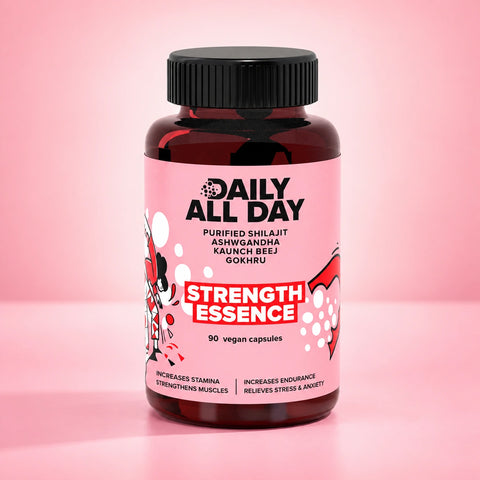
Gluco Wise- Blood Sugar Support combines Gymnema Sylvestre, Bitter Melon, and Fenugreek in a single daily formula designed around this exact fatigue mechanism. For the cortisol-glucose overlap , common in remote workers , pairing it with Strength Essence (ashwagandha, shilajit, and kaunch beej) addresses the adrenal side of the equation. If disrupted sleep is the primary complaint, Stress Free , which includes chamomile, L-theanine, and green tea extract , supports the overnight recovery window that blood sugar instability often shortens.
30 / 60 / 90 Day Timeline
Day 30: Most people notice fewer pronounced afternoon energy crashes. Post-meal fatigue becomes less severe. Sleep may feel more restoring, though the change is often subtle at this stage. Consistency matters more than dose optimization here.
Day 60: Glucose patterns tend to stabilize more broadly. Morning energy on waking improves for many users. This is typically when the "I slept eight hours and still feel wrecked" pattern starts to ease. Those combining Gluco Wise with dietary changes (more fiber, less refined carbohydrate) tend to see stronger results at this checkpoint.
Day 90: The sustained effect becomes the new baseline. Energy is more even across the day , not a high, just the absence of the mid-afternoon floor. At this stage, the question of whether do GLP-1 natural alternatives really work for fatigue tends to answer itself experientially. Blood sugar fatigue after 8 hours sleep is genuinely less frequent for most consistent users.
Frequently Asked Questions
Do GLP-1 natural alternatives really work for fatigue, or is this just Ozempic hype spilling over?
The hype is real, but so is the underlying science. GLP-1 is a genuine hormone with a measurable role in post-meal glucose control and energy regulation. Plant compounds like Gymnema Sylvestre and Fenugreek act on L-cells in the gut that secrete GLP-1, and the evidence for their glucose-moderating effects comes from controlled trials, not just cell studies. The effect is more modest than pharmaceutical GLP-1 agonists, but for fatigue driven by blood sugar swings rather than obesity, a modest effect on the right mechanism can produce a noticeable daily difference.
Can someone with normal fasting blood sugar still benefit from a natural GLP-1 supplement for energy?
Yes. Fasting glucose is only one snapshot of glucose regulation. Post-meal spikes , reactive hyperglycemia , can occur even in people with normal fasting numbers, and those spikes drive the insulin overshoot that produces the two-hour energy crash. If your fatigue consistently appears 90–120 minutes after eating, that's a reasonable signal that post-meal glucose dynamics are involved, even if your fasting labs look fine. Natural GLP-1 support targets exactly that window.
What's the difference between Gymnema Sylvestre blocking sugar absorption and actually stimulating GLP-1?
These are two distinct mechanisms that happen to produce overlapping outcomes. Gymnemic acids physically compete with glucose at intestinal transporters, slowing how fast sugar enters the bloodstream , that's the absorption-blocking effect. Separately, emerging research suggests Gymnema also triggers L-cell stimulation in the gut, prompting GLP-1 secretion. The second mechanism is what makes Gymnema interesting beyond simple fiber or starch blockers, though the L-cell evidence is newer and still being characterized in larger human trials.
How does blood sugar fatigue after 8 hours sleep differ from regular tiredness?
Regular tiredness from sleep deprivation improves with more sleep. Blood sugar fatigue after 8 hours of sleep does not , because the driver isn't sleep quantity, it's what glucose is doing overnight. If blood sugar drops too low in the early morning hours (common after a high-carbohydrate dinner), cortisol surges to raise it back up. That cortisol spike is stimulating and often wakes the brain into a lighter sleep stage, even if you don't fully wake. You surface feeling unrefreshed because your nervous system was activated during the night, not resting.
Is there a timing benefit to taking Gymnema or Gluco Wise with specific meals?
Timing matters more than most supplement labels acknowledge. Gymnema's effect on intestinal glucose transporters is most relevant when taken 20–30 minutes before the largest carbohydrate meal of the day. Taking it after eating reduces the window for that mechanism to engage. Fenugreek's soluble fiber effect also works best pre-meal or with the first bites, since it needs time to form a gel layer in the stomach. Consistent daily use matters most, but pre-meal timing with dinner , typically the largest glycemic load for most Americans , is the most strategic option.
Are there people who should avoid natural GLP-1 alternatives even if they're struggling with fatigue?
Yes. People on sulfonylureas or insulin should be cautious, since Gymnema and Bitter Melon have additive glucose-lowering effects that can push levels too low when combined with medication. Pregnant or breastfeeding individuals should skip these until more safety data exists, particularly for Bitter Melon, which has shown uterine-stimulating properties in animal studies. Anyone whose fatigue has a clear non-metabolic cause , diagnosed sleep apnea, thyroid disorder, or clinical anemia , should address that primary condition first, since no blood sugar supplement will compensate for a structural problem.