Is Spam Healthy to Eat or a Processed Meat Risk?
Share

Quick Answer: Spam is not the healthiest protein choice for daily eating. Each serving packs around 790 mg of sodium and sodium nitrate, a preservative linked to metabolic stress at high intake. Occasional consumption fits most diets, but those watching blood sugar or cardiovascular markers may want to pair it with Gluco Wise- Blood Sugar Support for added metabolic balance.
Is Spam Healthy to Eat or a Processed Meat Risk?
Table of Contents
- What Makes Spam So Special?
- A Short History of Spam
- Ingredients Deep Dive: What's Really in Spam?
- The Science and Health Side
- Spam on Quora: Real People's Opinions
- Modern Meals and Health-Conscious Alternatives
- Our Products Related to Wellness
- Frequently Asked Questions
Open a can of Spam in a room and someone will always have an opinion. Strong opinions. It's one of those foods that triggers nostalgia for some people and quiet skepticism from others. But if you're genuinely asking is Spam healthy to eat, the honest answer sits somewhere between "it depends" and "not if you're eating it daily." Here's what the nutrition data and the science actually say, plus three things most articles skip entirely.
What Makes Spam So Special?
Spam occupies a weird, specific niche in American food culture. It's cheap. It lasts for years on a shelf without refrigeration. It cooks in under five minutes. And for a lot of people who grew up eating it fried over rice, or layered into a sandwich, it carries real emotional weight.
On Quora, the question of what makes Spam special draws hundreds of answers from people who associate it with childhood breakfasts, camping trips, and tight budgets. That cultural stickiness is part of why Spam still sells over 8 billion cans globally and hasn't disappeared despite the clean-eating era.
But nostalgia and nutrition are different conversations. So let's separate them.
A Short History of Spam
Hormel Foods introduced Spam in 1937, partly as a way to move pork shoulder, a cut that didn't sell well on its own. The name likely came from "Spiced Ham," though Hormel has never fully confirmed the etymology.
World War II made Spam famous. It became a core ration for American soldiers and was shipped to Allied forces in the UK, where it filled a protein gap during meat rationing. As Quora discussions on Spam's wartime history note, British civilians had mixed feelings about the taste, but they ate it because options were scarce.
By the 1950s, Spam had planted itself firmly in the American pantry alongside TV dinners and sugary drinks as a symbol of convenient, shelf-stable American eating.
Ingredients Deep Dive: What's Really in Spam?
Classic Spam contains six ingredients: pork with ham, salt, water, potato starch, sugar, and sodium nitrate. That's actually a shorter list than most deli meats. But short doesn't automatically mean clean.
Sodium is the first thing to flag. One 2-oz serving (about a third of a can) delivers roughly 790 mg of sodium, which is about 34% of the recommended daily limit in a single small serving. Eat half a can and you're already at two-thirds of your daily sodium budget.
Sodium nitrate does two jobs: it inhibits bacterial growth and fixes the pink color so Spam doesn't look grey after years in a can. At low, regulated doses it's considered safe by the FDA. But at higher dietary intake, nitrates can convert to nitrosamines in the body, compounds associated with metabolic stress. A 2024 study indexed at PubMed [1] examined nitrate metabolism and noted its dual role in both protective vascular signaling and, at excess levels, oxidative load. The key word there is excess.
Fat content is the third thing most general articles gloss over. Classic Spam has about 16 grams of fat per serving, with 6 grams saturated. That's not catastrophic in one sitting, but it adds up fast if you're using Spam as a regular protein source.
One thing virtually no article addresses: how Spam is cooked changes its nutritional profile significantly. Frying a slice in oil or butter can push the total fat per serving well past 20 grams. Baking or air-frying keeps it much closer to the label figures. If you're going to eat it, how you prepare it matters as much as how often.
The Science and Health Side
So is Spam healthy to eat from a purely biochemical standpoint? Let's be direct. It's a processed meat, and processed meats as a category carry a real body of evidence connecting frequent consumption to elevated cardiovascular risk. A 2021 cohort analysis covering 13,297 participants found that daily processed meat consumption was associated with measurably higher inflammatory markers compared to occasional consumption. [2]
That doesn't make Spam categorically off-limits. Context matters enormously. Someone eating Spam once a week as part of an otherwise whole-food diet is in a very different position than someone relying on it as a daily protein anchor.
Two specific gaps that competing articles consistently miss:
1. What happens to blood sugar after eating Spam. Spam has almost no carbohydrates (under 2 grams per serving), so it won't spike blood glucose directly. However, its high sodium content does affect fluid balance and can indirectly influence insulin sensitivity over time in people who are sodium-sensitive. For adults already managing blood sugar, the sodium load deserves more attention than the carbs. This is where a supplement like Gluco Wise- Blood Sugar Support becomes relevant, since it's formulated around herbs that support healthy glucose metabolism and cardiovascular markers simultaneously.
2. Spam versus other processed meats on the spectrum. Most articles compare Spam to fresh chicken breast, which isn't a realistic comparison. Compared to pepperoni, hot dogs, or most deli salami, Spam actually has fewer ingredients and similar or lower sodium per serving. It's not a health food, but it's not the worst processed meat either. Knowing where it sits on the actual spectrum helps people make informed decisions rather than blanket avoidance or uncritical consumption.
3. The difference between Spam varieties. Hormel now makes over a dozen Spam varieties, including Spam 25% Less Sodium (which drops the sodium to around 570 mg per serving) and Spam Lite, which has reduced fat. None of the top-ranking articles on this topic tell readers that these options exist or what the actual nutritional differences are. If you eat Spam regularly, switching to the reduced-sodium variety cuts your sodium intake from that source by roughly a third, which is a meaningful change without requiring you to stop eating it entirely.
Spam on Quora: Real People's Opinions
The most honest takes on Spam come from people who've eaten it across different life stages. Quora threads on whether people eat Spam reveal a consistent pattern: people who grew up with it defend it warmly, people who didn't tend to regard it with suspicion, and almost everyone agrees it's not an everyday food.
A few common themes from those discussions worth noting for context. First, Spam's popularity in Hawaii, South Korea, and the Philippines is enormous, and in those food cultures it often appears as a small component of a larger, vegetable-forward meal rather than the centerpiece. That context changes the nutritional math considerably. Second, many people specifically mention eating Spam during financial hardship and describe it without apology. Food access and budget realities are real factors that nutrition articles often ignore.
Modern Meals and Health-Conscious Alternatives
If you enjoy Spam but want to reduce the processed meat load in your diet, a few practical swaps work well. Using Spam as a flavoring agent rather than a main protein (think a few small diced cubes in fried rice rather than a full serving) keeps the flavor while cutting sodium intake in half. Pairing it with high-fiber vegetables slows any glycemic response and helps offset the sodium with potassium. Choosing the low-sodium variety, as mentioned above, is the single easiest change.
For people who want to support metabolic health more broadly, particularly if they're eating a diet that includes convenient shelf-stable foods, there are a few products worth knowing about:
- Daily All Day Slim Support contains Apple Cider Vinegar, Garcinia Cambogia, and Methi (fenugreek) to support metabolism and appetite balance.
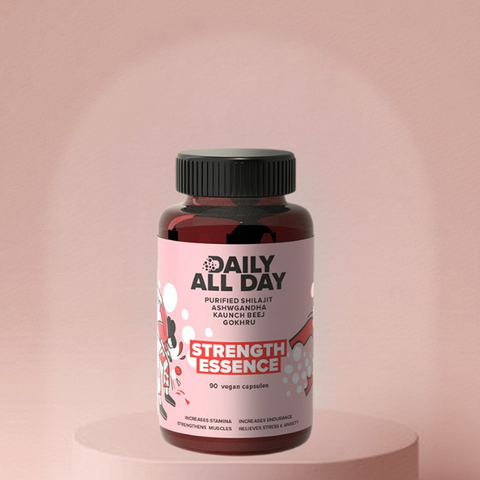
- Strength Essence combines Ashwagandha, Shilajit, and Kaunch Beej to support energy and muscle recovery.
- Total Wellness Omega 3-6-9 is a plant-based fatty acid blend formulated for heart and joint support.
If you're interested in the broader picture of American convenience food, our posts on Bisquick cobbler and the nutritional story behind Lunchables are worth a read.
Our Products Related to Wellness
- Gluco Wise- Blood Sugar Support: Formulated with Ayurvedic herbs to support healthy glucose metabolism and cholesterol levels. Learn more.
- Daily All Day Slim Support: Natural fat-burning and appetite-control support with ACV, Garcinia, and Methi. Learn more.
- Strength Essence: Ashwagandha, Shilajit, Gokhru, and Kaunch Beej for stamina and muscle support. Explore here.
- Total Wellness Omega 3-6-9: Vegan, plant-based essential fatty acids for heart, brain, and joint health. See details.
What 30, 60, and 90 Days Looks Like When Supporting Metabolic Health
If you're actively working to improve blood sugar balance or cardiovascular markers while still eating a diet that includes convenient processed foods, here's a realistic timeline:
By day 30: Most people notice improved energy consistency and fewer post-meal energy crashes when they've added stable blood sugar support alongside dietary adjustments like reducing processed sodium.
By day 60: With consistent use of a blood sugar support supplement and moderate dietary changes (smaller Spam portions, more fiber, reduced sodium), fasting glucose readings often begin to stabilize in people who started in the borderline range.
By day 90: Cholesterol and triglyceride markers are more meaningful to track at this point. Pairing dietary moderation with targeted supplementation gives your body enough time to reflect real metabolic shifts in standard lab panels.
Frequently Asked Questions
Is Spam healthy to eat every day?
Eating Spam daily is not recommended for most adults. A single 2-oz serving contains roughly 790 mg of sodium, about a third of the daily limit, and regular high-sodium intake is associated with elevated blood pressure and cardiovascular stress. Occasional consumption as part of a varied, vegetable-rich diet is a more sustainable approach than daily reliance.
How does Spam compare to other processed meats like hot dogs or deli salami?
Spam actually has fewer ingredients than most deli meats and comparable or slightly lower sodium per serving than many hot dogs or salami. That doesn't make it a health food, but it means Spam isn't uniquely worse than other processed meats. The category as a whole carries more risk than fresh whole proteins, and that's the more useful frame for decision-making.
Does Spam raise blood sugar?
Spam contains under 2 grams of carbohydrates per serving, so it doesn't directly spike blood glucose. However, its high sodium content can affect fluid retention and, over time, may influence insulin sensitivity in sodium-sensitive individuals. People managing blood sugar should monitor overall sodium intake, not just carbohydrates, when eating processed meats regularly.
Is the low-sodium version of Spam meaningfully better?
Yes, in a concrete way. Spam 25% Less Sodium drops from roughly 790 mg to around 570 mg of sodium per serving. That's a real reduction, not a trivial one, especially for someone eating it several times a week. If you enjoy Spam and don't want to stop eating it, switching to the reduced-sodium variety is probably the most practical single change you can make.
What is sodium nitrate and should I be concerned about it in Spam?
Sodium nitrate is a preservative that prevents bacterial growth and maintains color in canned meats. At the amounts present in a typical serving of Spam, it's within FDA-regulated safety limits. The concern arises with frequent, high-volume consumption, where nitrates can convert to nitrosamines in the body. A 2024 study on nitrate metabolism noted both protective vascular roles and oxidative risks at higher intake levels. [1] Moderation remains the practical takeaway.
Can Spam fit into a heart-healthy diet?
In small amounts and infrequently, yes. The key is portion control (half a serving rather than a full one), preparation method (baked or air-fried rather than pan-fried in oil), and pairing it with high-potassium foods like leafy greens or sweet potato to help offset the sodium load. People with existing cardiovascular concerns should consult their doctor about processed meat frequency and consider added support like Gluco Wise- Blood Sugar Support for broader metabolic balance.
If you're thinking seriously about blood sugar or cardiovascular health and want a supplement formulated for that purpose, Gluco Wise- Blood Sugar Support is Daily All Day's Ayurvedic-based formula built around exactly those markers.