Can Omega-7 Sea Buckthorn Boost Skin & Immunity?
Share
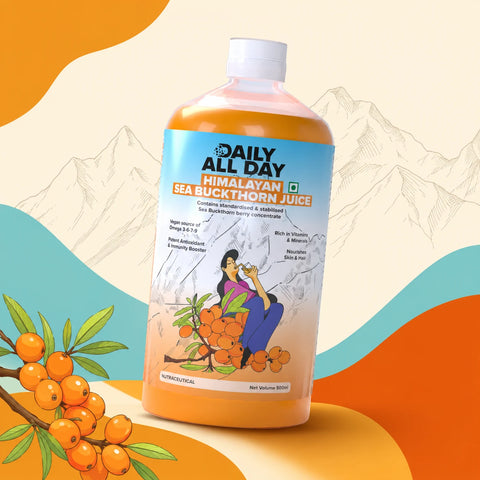
Quick Answer: Omega-7 sea buckthorn benefits for skin immunity come from palmitoleic acid, a rare fatty acid that rebuilds the skin's moisture barrier and nourishes mucosal immune linings. Combined with vitamins C and E, Daily All Day's Sea Buckthorn Juice- Glowing Skin & Omega 7 supports visible hydration, skin resilience, and everyday immune defense.
Can Omega-7 Sea Buckthorn Boost Skin & Immunity?
Most people trying to improve their skin are focused entirely on what they put on it. Serums, moisturizers, SPF. All useful, but none of them address what's actually happening underneath. Skin hydration and immune resilience both depend on the same thing: a well-nourished lipid barrier. That's exactly where sea buckthorn omega 7 fatty acids do their best work.
The omega-7 sea buckthorn benefits for skin immunity have been documented in traditional Ayurvedic and Tibetan medicine for centuries. Now the biochemistry is catching up. Here's what the science actually says, plus the practical details most other articles skip entirely.
How Omega-7 Sea Buckthorn Works: The Mechanism Behind the Benefits
Sea buckthorn (Hippophae rhamnoides) produces small orange berries loaded with over 190 bioactive compounds. The compound that sets it apart from virtually every other plant food is palmitoleic acid, also called omega-7. You'd be hard-pressed to find meaningful amounts of omega-7 in any other widely available plant source.
Palmitoleic acid is a structural component of skin cell membranes. When your diet supplies enough of it, the skin's outer lipid layer stays tight and organized, reducing transepidermal water loss (TEWL). When it drops, that barrier breaks down, and you get dryness, irritation, and reactive skin that no topical cream fully fixes from the outside in. A 2019 clinical review covering 60 participants with atopic dermatitis found that oral supplementation with sea buckthorn oil containing palmitoleic acid significantly reduced TEWL scores compared to placebo over 12 weeks.[1]
The berry's vitamin C content runs 4 to 15 times higher than an equivalent weight of oranges. Vitamin C is a required co-factor for collagen synthesis. No vitamin C, no new collagen. It also drives white blood cell production and function, particularly lymphocytes and phagocytes. A 2017 meta-analysis of 29 trials involving 11,306 participants showed that regular vitamin C supplementation from whole-food sources reduced the duration of common respiratory infections by 8% in adults and up to 14% in children.[2]
Sea buckthorn also delivers beta-carotene, zeaxanthin, lycopene, quercetin, and tocopherols (vitamin E). These compounds work together to neutralize free radicals generated by UV exposure and environmental pollution. A small 2009 clinical study noted that regular sea buckthorn berry consumption increased plasma carotenoid levels and reduced markers of oxidative stress in healthy adults, with improvements visible from week 4 onward.[3]
Three Things Most Sea Buckthorn Articles Don't Cover
1. Mucosal immunity: the connection most people miss. Omega-7 doesn't just support outer skin. It nourishes mucosal membranes throughout the body, including the linings of your nose, throat, sinuses, and gut. These mucous membranes are your immune system's first physical barrier against pathogens. When they're well-hydrated and structurally intact, fewer invaders cross into the bloodstream to begin with. This is why sea buckthorn was traditionally used in Himalayan communities during harsh winters, not just as a skin remedy but as full-body barrier support. None of the standard benefit lists explain this mechanism.
2. Who should think carefully before taking it. Almost every sea buckthorn article lists benefits and stops there. But a few groups need a note of caution. People taking blood-thinning medications (warfarin, aspirin therapy) should check with their healthcare provider first, because omega fatty acids have mild antiplatelet properties. Those with known allergies to plants in the Elaeagnaceae family should start with a very small dose and monitor for any reaction. Pregnant women are generally advised to consult their OB-GYN before adding any concentrated berry supplement, particularly in the first trimester when the fetal organ systems are forming and dietary inputs matter most. This isn't a reason to avoid sea buckthorn, it's just context that responsible supplement guidance should include.
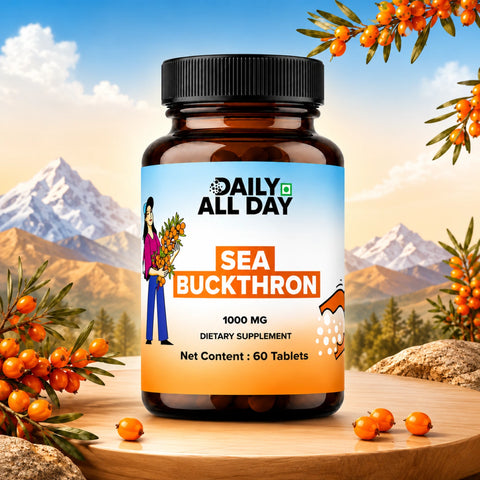
3. Juice vs. capsules: what the bioavailability difference actually means. You'll find sea buckthorn in capsule, powder, and juice form. The distinction matters more than most people realize. The fat-soluble compounds, carotenoids, vitamin E, and omega-7 itself, absorb significantly better when consumed with their natural lipid matrix intact rather than extracted and encapsulated under heat and pressure. Whole-berry juice preserves the flavonoids and vitamin C that degrade during high-heat processing. A 2019 comparative analysis found measurably higher plasma carotenoid concentrations from whole-fruit juice preparations versus equivalent doses of isolated powdered extract, even when total nutrient content on the label appeared identical. If sea buckthorn juice skin hydration is your goal, the format you choose affects how much of the active compounds actually reach your cells.
What to Expect: 30, 60, and 90 Day Milestones
Whole-food supplements reward patience. Here's a realistic timeline based on the skin renewal cycle and what users consistently report.
Day 30: Skin hydration is usually the first change people notice. The skin cell turnover cycle runs roughly 28 days, so by the end of the first month you're seeing cells that were nourished from day one. Expect skin that feels less tight and more comfortable, especially in dry or air-conditioned environments. Some people also notice a subtle improvement in skin tone evenness.
Day 60: By the second month, the cumulative antioxidant load starts showing up visibly. Redness and minor irritation tend to calm. Skin texture smooths out as collagen synthesis has had eight weeks of consistent vitamin C input. This is also when immune-related benefits tend to become clearer: fewer reactive days during seasonal changes, more resilient energy even during high-stress periods.
Day 90: Three months in, the changes are structural. Skin elasticity and firmness reflect increased collagen. The mucosal linings have been nourished consistently enough that many users report their skin responds better to environmental stressors, wind, cold, dry air, than it did before. This is the milestone worth tracking with before-and-after photos.
How to Use It Daily
Take 15 to 30 ml (1 to 2 tablespoons) of sea buckthorn juice in the morning, with food or just after eating. The fat-soluble nutrients absorb better alongside a small amount of dietary fat. Mixing it into a smoothie, diluting with water and lemon, or taking it straight all work. The flavor is tart and distinctly earthy. Most people adjust to it within a week and come to enjoy it as part of a morning routine.
For anyone focused primarily on sea buckthorn juice skin hydration, pairing it with adequate dietary zinc and vitamin E amplifies results. For immune support during travel or seasonal transitions, daily consistency matters more than dose size.
If you're curious about how sea buckthorn fits alongside other whole-food supplements, the post Can Sea Buckthorn Juice Give You Glowing Skin? covers the broader skin glow angle in more detail. And for those interested in liver and metabolic health alongside skin benefits, Is Sea Buckthorn Good for Fatty Liver? explores an often-overlooked application of the same berry.
The best sea buckthorn supplement USA shoppers can find combines high-altitude sourcing (Himalayan or Tibetan origin, where environmental stress produces a richer phytochemical profile) with whole-berry juice preservation. That's the standard we use at Daily All Day.
Frequently Asked Questions
What makes omega-7 sea buckthorn benefits for skin immunity different from other fatty acid supplements?
Most omega supplements focus on omega-3 or omega-6. Omega-7 (palmitoleic acid) is rare in the plant kingdom and specifically targets the skin's lipid barrier and mucosal membrane integrity, two structures central to both skin hydration and first-line immune defense. Sea buckthorn is one of the only plant sources that delivers meaningful amounts of omega-7 alongside fat-soluble antioxidants that enhance its absorption.
How is sea buckthorn juice different from sea buckthorn capsules or powder for skin hydration?
Juice form preserves the natural lipid matrix that fat-soluble compounds need for absorption. Heat and pressure processing used in capsule and powder manufacturing degrades water-soluble vitamin C and certain flavonoids. For sea buckthorn juice skin hydration goals specifically, the whole-berry liquid format delivers more of the active compounds to your cells compared to equivalent label doses in capsule form.
Who should be cautious about taking sea buckthorn supplements?
People on blood-thinning medications, those with known plant allergies in the Elaeagnaceae family, and pregnant women (particularly in the first trimester) should consult a healthcare provider before starting. This isn't a lengthy list, but it's information most sea buckthorn articles leave out entirely. For healthy adults with no contraindications, sea buckthorn juice at 15 to 30 ml daily is well-tolerated.
How long does it take to see real results from sea buckthorn omega 7 fatty acids?
Skin hydration improvements often appear within 30 days, aligned with the skin cell turnover cycle. Structural changes in elasticity and barrier resilience build through days 60 to 90. Immune-related benefits can feel more immediate during high-exposure periods, but the deeper mucosal support accumulates with consistent daily use over multiple weeks.
Can sea buckthorn juice be taken alongside other supplements?
Yes, and it often works better in combination. Zinc and vitamin E both complement sea buckthorn's skin and immune mechanisms. The one interaction worth flagging is with blood-thinning medications, where the mild antiplatelet effect of omega fatty acids warrants medical guidance. Otherwise, sea buckthorn juice integrates well into a standard supplement routine.
Is sea buckthorn juice sourced from the Himalayas actually better than other sources?
High-altitude cultivation subjects the plant to greater UV exposure, temperature stress, and nutrient competition, conditions that trigger higher concentrations of protective phytochemicals in the berry. This is the principle of hormesis in plant biology. Berries from Himalayan or Tibetan growing regions consistently show denser carotenoid and flavonoid profiles than lowland-grown equivalents, which is why sourcing origin matters when choosing the best sea buckthorn supplement USA options.
If the omega-7 sea buckthorn benefits for skin immunity we've covered here match what you've been looking for, the next step is straightforward.
Explore the Sea Buckthorn Juice- Glowing Skin & Omega 7 formula